



Custom Website Development Strategy
Template websites often look finished but fail to support real website conversion optimization, SEO growth and business differentiation. This article explains why custom website development, custom web design and strategic website development create stronger results for multi-page websites. You will learn how custom web development services, website content development, web development SEO and website conversion strategy help build custom website experiences that guide users toward action. Use these insights to understand when a custom web design agency, custom website developer or custom web development company can deliver more value than a standard template.
Introduction: A Website on Tilda, Fast, Cheap, and... Pointless?
Website builders are fine for a one-service landing page. But once a business grows and adds a catalogue, blog, case studies, and a client account, a template structure turns into a maze. Customers cannot find what they need, and search engines struggle to understand the page hierarchy. We believe a multi-page website should be designed like a digital supermarket for your business, and that starts not with code, but with deep audience analysis.
Section 1: How Our Approach Differs from "Design It and Build It"
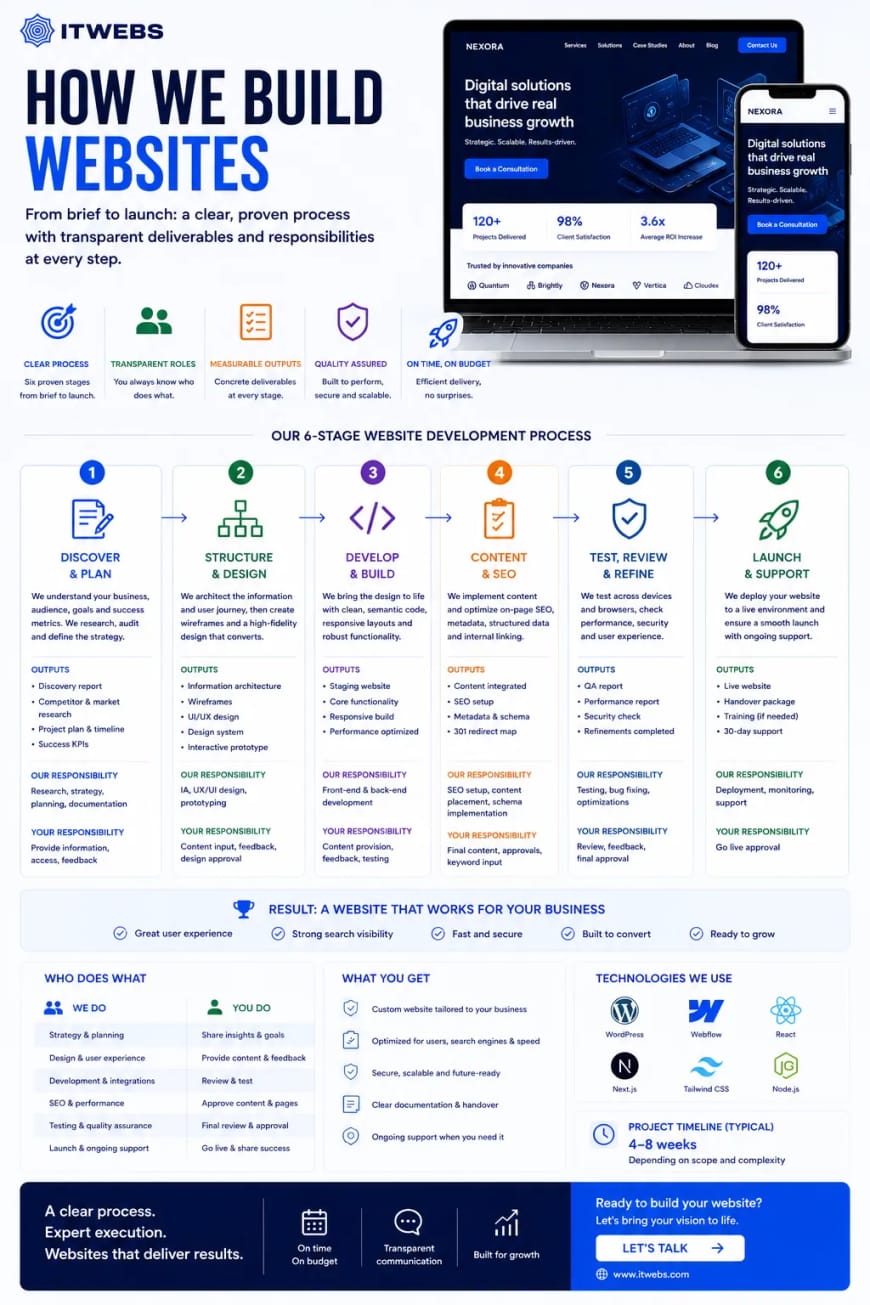
- Customer Journey Mapping. We map the customer's path from awareness to purchase and repeat business. Which page answers which question? Where does the customer hesitate, and how do we remove that hesitation?
- Semantic core from day one. An SEO specialist joins at the prototyping stage. Every section and subsection gets its own search cluster. No dead pages that no one is looking for.
- UI and UX shaped by the journey. Our designer does not just make things look good. They place calls to action according to the role of each page. Even blog pages can lead users naturally toward your services through contextual links.
Section 2: The Core Modules of Our Typical Website Project
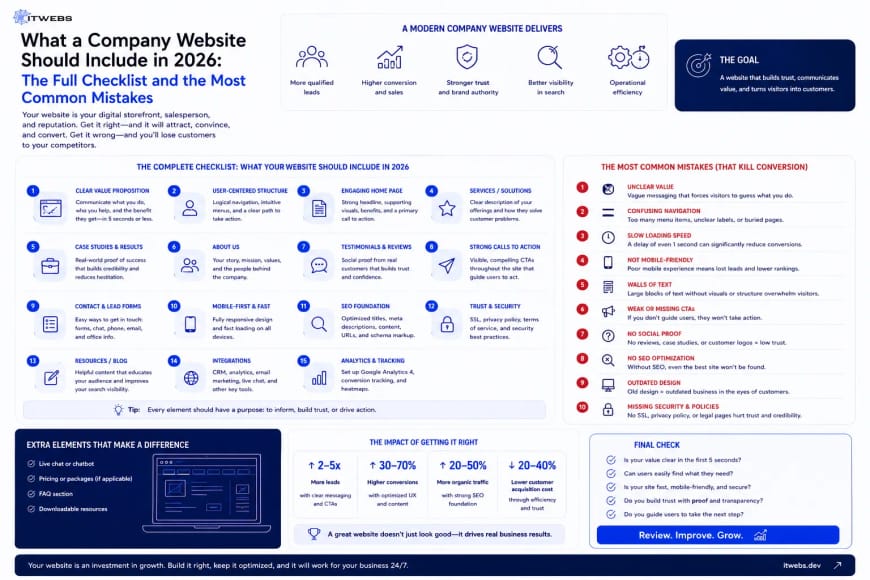
- Homepage as a navigation hub. Not everything at once, but a fast entry into core sections plus a strong value proposition.
- Service or product catalogue with filters and conversion-focused cards.
- Blog or knowledge base for organic traffic and expertise positioning.
- Case studies or portfolio as proof.
- About and contacts for transparency and trust.
- Client account, optional, if you need order history or document uploads.
Section 3: Why a Template Cannot Deliver the Same Result
Builders offer generic blocks: header, three columns, footer. But what if your client needs video more than text? Or a complex specification table more than a gallery? We design components that solve specific user problems, such as pricing calculators, product configurators, or interactive delivery maps. That is what real custom development means.
Section 4: The Result, a Website That Lives and Scales
A custom website is easy to expand. If you launch a new product in a year, we simply add a new section to the structure, and it inherits the visual system, SEO settings, and integrations. No rebuilding from scratch.
Conclusion: A Website Is Not a Picture, It Is a Customer Acquisition and Retention System
Do not let a template limit your growth. Invest in the right architecture from the beginning.
Want a website that evolves with your business? Order a free homepage prototype based on our customer journey analysis. You will see the difference.