



SEO Built into Website Development
SEO from the Start: Why Building Optimisation into Website Development Is Not Optional explains why search visibility should be planned before design and development begin. This guide covers strategy, planning, examples, benefits, common mistakes and best practices for building SEO into site architecture, content structure, technical performance and user journeys. You will learn how custom website development, web development strategy and website conversion optimization work together to create websites that attract traffic, load fast, rank better and convert visitors into business enquiries.
Introduction: "We Will Optimise It Later" Can Cost You a Year and a Small Fortune
The usual story goes like this: a beautiful website is launched, paid ads go live, and a month later you realise that search brings in no clients at all. The site looks great, but it does not rank. The reason is simple: SEO must be built in before the first line of code, not after launch. Here is how we lay the SEO foundation at the development stage.
Section 1: Semantic Core Shapes the Website Structure
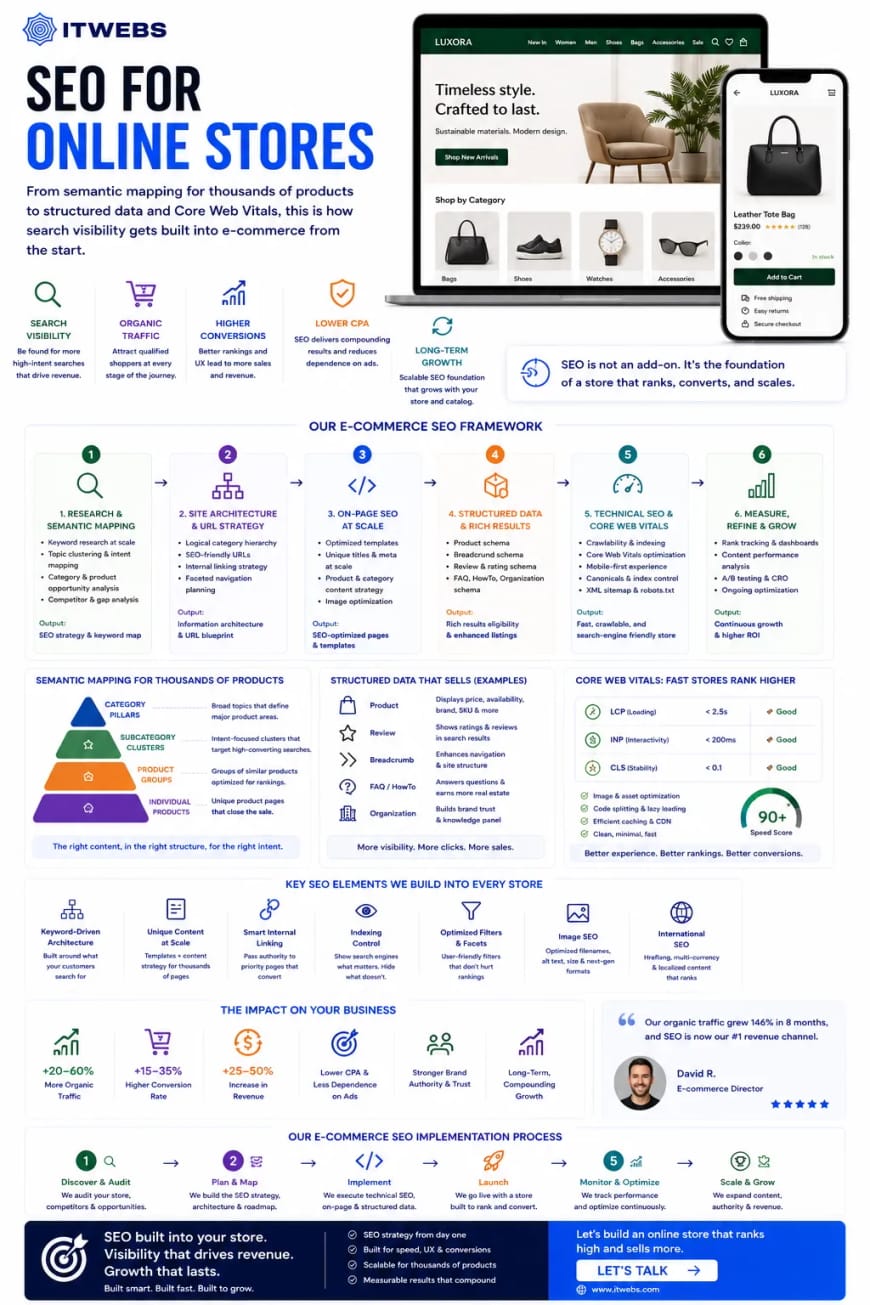
We do not invent sections from intuition. Our SEO analyst gathers both commercial and informational search intent and uses it to shape the site architecture:
- Homepage for the highest-volume commercial term.
- Service sections for mid- and low-frequency clusters.
- Blog and articles for informational traffic and link-building opportunities.
Every page is created for a specific keyword group. This prevents keyword cannibalisation and ensures every page has clear search value.
Section 2: Our Technical SEO Checklist
- Clean human-readable URLs: for example,
/services/apartment-renovationinstead of/page?id=123. - Robots and sitemaps: correct robots.txt configuration and a dynamic sitemap.xml.
- Structured data: Schema.org for Organisation, BreadcrumbList, Product, FAQ, and Article, helping search engines generate richer snippets.
- Meta tags: Title, Description, and H1 can be generated from page data but always remain editable manually.
- Canonical URLs and 301 redirects: to prevent duplicates.
Section 3: Performance and Core Web Vitals Are Part of the Plan
Google uses page speed and stability as ranking factors, so from the outset we include:
- Image optimisation through WebP and lazy loading.
- CSS and JavaScript minification.
- Server-side caching and CDN support.
- No heavy render-blocking scripts.
The result is a site that scores in the green zone of PageSpeed Insights and gains an advantage over bloated builder-based competitors.
Section 4: A Real Example, 2,000 Monthly Visitors Without Ads
For a clinic, we designed a structure with dedicated pages for every medical direction and city district. Because the SEO groundwork was built during development, four months after launch the site ranked in the top ten for more than 40 mid-frequency queries, bringing over 2,000 relevant visits per month without paid search.
Conclusion: SEO Is Not Magic, It Is Architecture
If a site is built on the right foundation from the beginning, promotion becomes faster and far more cost-effective.
Planning a new site and want to avoid SEO resuscitation a year later? Order a free semantic audit for your niche. We will show you exactly which page structure should be built in from the start.